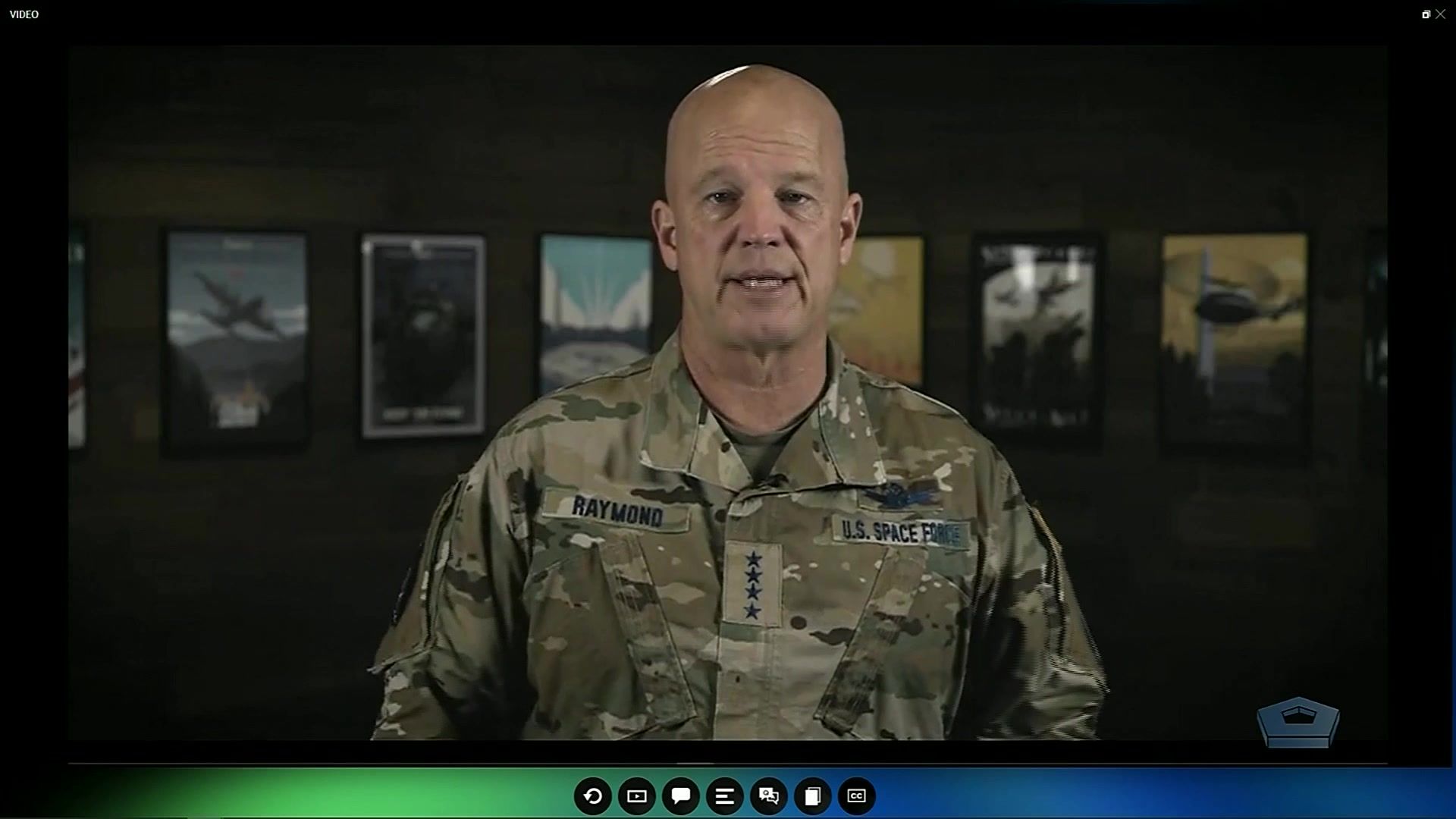
Space Force’s Gen. Raymond Charts Service’s Galactic Mission
Article by David Vergun October 22, 2020 (defense.gov)
• “A war that begins or extends into space will be fought over great distances at tremendous speeds, posing significant challenges.” This is among the remarks that Space Force Gen. John W. “Jay” Raymond (pictured above) provided at the virtual Air Force Rapid Sustainment Office Advanced Manufacturing Olympics on October 22nd. Noting the challenges of the ‘Great Power’ competition with Russia and China, Raymond outlined Space Force’s role in the National Defense Strategy. “Today, we’re entering a defining period for this country in space. Our nation is leading an expansive spirit of space exploration and experimentation.”
• Space Force’s area of responsibility extends from 100 kilometers above Earth’s surface to the outer edge of the universe. On-orbit capabilities move at speeds greater than 17,500 miles per hour. Direct ascent and satellite missiles can reach low-Earth orbit in a matter of minutes. Electronic attack and directed-energy weapons move at the speed of light.
• Raymond said his guidance to Space Force’s military professionals is to be bold, innovative; use the outstanding talent the service has; and be lean, agile and fast. “Since establishment, we have slashed bureaucracy, delegated authority and enhanced accountability,” he said. Space Force is working with industry and academia to find the “disruptive innovators and incubators for change.” (‘Disruptive’ means innovations that are new, and not simply upgrades or retooling old technologies.) “Today our space capabilities are, by far, the best in the world,” said Raymond. “But they were built for an uncontested domain.”
• The U.S. needs a more defensible architecture, one that is equipped for offensive operations should deterrence fail. All of this capability has to come at an affordable price. Advanced manufacturing is rapidly transforming the way space capabilities are designed and delivered. Spacecraft fuel tanks, antennas, structures and engines are already being produced via techniques with materials uniquely tailored for space. “These technologies allow us to move rapidly from capability design to prototyping,” said Raymond.
• Raymond points out that America is a spacefaring nation and has long led military, civil and commercial space centers. “Today, we’re entering a defining period for this country in space. Our nation is leading an expansive spirit of space exploration and experimentation. And we are strongest when space is secure, stable and accessible to enterprising Americans for scientific, economic and security interests.”
The chief of space operations and commander of U.S. Space Command discussed challenges the U.S. is facing in space and the Space Force’s efforts to address them.
Space Force Gen. John W. “Jay” Raymond, provided remarks from the Pentagon today at the virtual Air Force Rapid Sustainment Office Advanced Manufacturing Olympics today.
“A war that begins or extends into space will be fought over great distances at tremendous speeds, posing significant challenges,” said Raymond, noting Great Power competition with Russia and China, outlined in the National Defense Strategy, which could pose future challenges.
Spacecom’s area of responsibility extends from 100 kilometers above Earth’s surface to the outer edge of the universe, he noted.
Today, we’re entering a defining period for this country in space. Our nation is leading an expansive spirit of space exploration and experimentation.”
Space Force Gen. John W. “Jay” Raymond, commander, U.S. Space Command
On-orbit capabilities move at speeds greater than 17,500 miles per hour. Direct ascent and satellite missiles can reach low-Earth orbit in a matter of minutes, Raymond said. Electronic attack and directed-energy weapons move at the speed of light.
In response, Raymond provided a galactic roadmap to what his service is doing. He said his guidance to Space Force’s space professionals at all levels is to be bold, innovative; use the outstanding talent the service has; and be lean, agile and fast.
“Since establishment, we have slashed bureaucracy, delegated authority and enhanced accountability,” he said.
FAIR USE NOTICE: This page contains copyrighted material the use of which has not been specifically authorized by the copyright owner. ExoNews.org distributes this material for the purpose of news reporting, educational research, comment and criticism, constituting Fair Use under 17 U.S.C § 107. Please contact the Editor at ExoNews with any copyright issue.












 REHOVOT, Israel, Oct. 21, 2020 /PRNewswire/ — Aleph Farms, Ltd., the leader in growing quality steaks
 To the achieve this goal, Aleph Farms is securing strategic partnerships with technology companies and space agencies for long term collaborative research and development contracts that will ensure the integration of Aleph Farms’ innovations into leading space programs. These programs will leverage the company’s deep-rooted know-how in cell biology, tissue engineering, and food science to establish BioFarms™ in extraterrestrial environments, enabling the company to eventually apply the lessons learned in space to earthbound sites.

 In 1954, there was a small colony at Ontario Hydro’s Wawaitin generating station, southwest of Timmins. The Hydro families there and those living at the top of the hill who worked for the Department of Lands and Forests often met socially. There was no TV in 1954. The evening of Sunday, Aug. 29 was such a night when Chief Forest Ranger George Sheridan with his wife Gloria, Don Ouimet, operator for Ontario Hydro and his wife Lois, met at the home of Ken and Shirley Kitchen. Ken was also an operator for Hydro.



 President Trump recently was recently asked about UFO’s. He replied, “I don’t know but I’ll find out.”





 only peace and serenity like I’ve never known but I also have witnessed the most incredibly profound sightings both in the sky as
 well as feet away from me,” she captioned a series of photos and videos of UFOs in the night sky.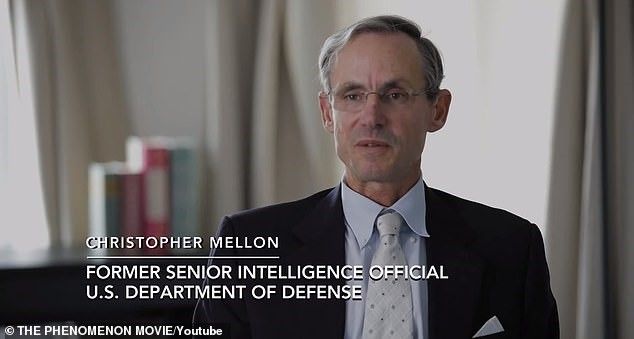
 Former Deputy Assistant Secretary of Defense for Intelligence, Chris Mellon, has revealed that he was the










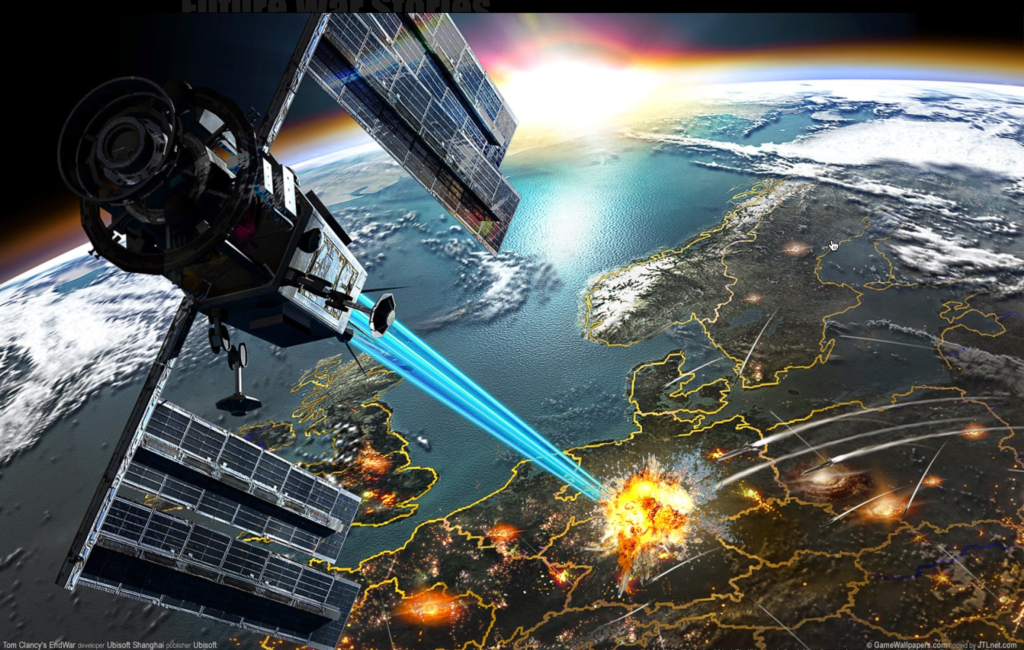

 and three other nations have demonstrated the ability to destroy orbiting satellites — Russia, China, and, most recently, India, with a test in March last year. Officials from the U.S. Air Force and the U.S. Space Force have largely confined themselves to talking about building the resilience and redundancy of U.S. space assets and protecting them from enemy attacks, such as ASATs.

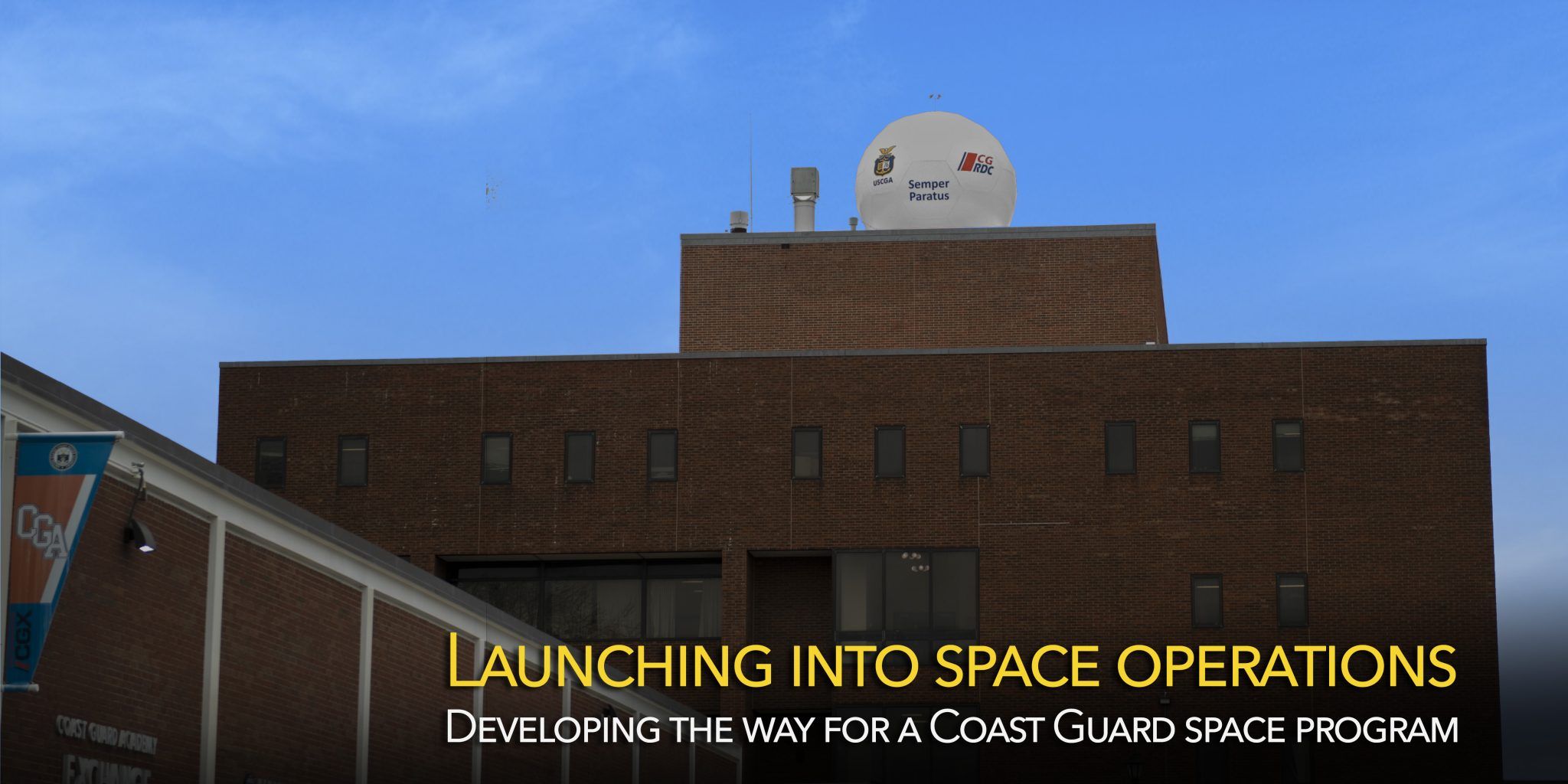
 In December 2018, the U.S. Coast Guard joined the space faring community. It teamed up with the Department of Homeland Security Science and Technology Division and SpaceX to execute the launch of two small cube satellites (“cubesats”) — Yukon and Kodiak — as part of the Polar Scout program.
 in the Arctic, a domain that has always been important but is of increasing strategic significance today because it is at the intersection of great power competition and global climate change. In short, a warmer climate results in greater access; greater access results in greater maritime traffic, including by Russia and China. The Chinese, in particular, are constantly pressing to exploit resources the world over, be it living marine or hydrocarbon-based. Likewise, greater traffic means more need for increased governance presence to ensure safe, rules-based operations within the Arctic.
 The Coast Guard is statutorily charged with serving as the United States’ Arctic governance presence. This means the Coast Guard increasingly requires the ability to communicate over-the-horizon — thus, Polar Scout. And while the Coast Guard lost linkage to Yukon and Kodiak shortly after launch, the mere fact that the service had the vision to go boldly to the heavens to meet that need should be a forerunner of things to come.
 shaping up to be turbo-charged by the commercial market and the seemingly never-ending, exponentially increasing power of computer processing. The United States is pursuing the Artemis Accords, the Space Force is getting off the ground, NASA is looking towards Mars (but first to the moon! To stay!), and commercial space pursuits are booming. The Coast Guard has already gotten in the game, but it must continue to seriously consider space as it develops budgets and strategies for the future.
 To succeed as an information-age military service and total-domain governance agency in the 21st century, the Coast Guard should view space through three lenses. First, how can the service best capitalize on cheap, ready access to space to facilitate its missions, as it had already started to do so with the Polar Scout launches? Second, how do commercial space efforts interact with the maritime industry and maritime domain; and to what extent, if any, does the Coast Guard need to adjust or modify its extensive suite of operating authorities and regulations to ensure that any risk to the safety and security of the maritime is adequately addressed? And third, how can the Coast Guard, as part of the joint force, assist the Space Force in executing the latter’s own responsibilities?


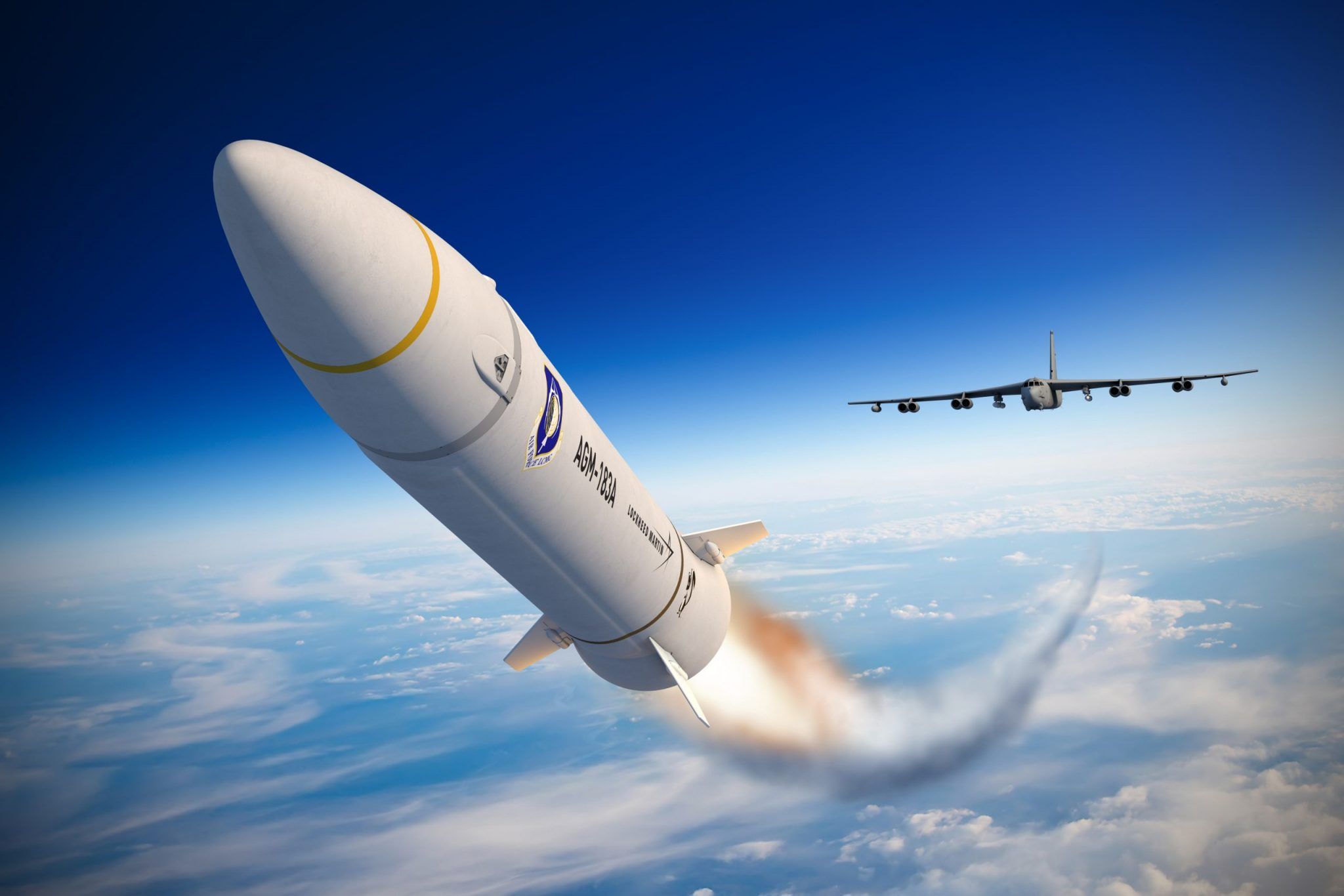


 with wide field of view (WFOV) overhead persistent infrared (OPIR) sensors. Those satellites will form the first layer of a planned surveillance network to track hypersonic missiles.





 New tools