
How Elon Musk and the US Could Establish a Martian Government
Article by Adam Smith December 24, 2020 (independent.co.uk)
• NASA has announced plans for the Artemis Moon mission to establish a lunar base in 2024, followed shortly thereafter by actual inhabitants. And NASA anticipates a manned mission to Mars by 2033. On the other hand, Elon Musk, the CEO of SpaceX, plans to send the first SpaceX craft to Mars by 2022, with humans following within the next four to six years. Musk envisions people living in glass domes as they terraform Mars to support life.
• Musk and SpaceX are already laying the groundwork for a Mars colony. A section of the company’s ‘Starlink’ satellite internet service user agreement states: “For services provided on Mars, or in transit to Mars via Starship or other colonization spacecraft, the parties recognize Mars as a free planet and that no Earth-based government has authority or sovereignty over Martian activities. …Accordingly, disputes will be settled through self-governing principles, established in good faith, at the time of Martian settlement.”
• Is this a joke, or is it the beginning of a Mars constitution based on existing legislation? Current law resides in the 2020 Artemis Accords and the 1957 Outer Space Treaty. A section that reads: “Outer space is not subject to national appropriation by claim of sovereignty, by means of use or occupation, or by any other means,” is meant to prevent outright “land grabs” by Earth nations. Lawyer Randy Segal points out that, “The whole of space law contemplates that those of us on this planet share the rights and responsibility to make space something we can all share together.” Segal suggests that Musk could be trying to lay some groundwork for offering up an independent constitution, just like he did for electric cars and reusable launch vehicles. Does it have any legal precedent or enforceability? No. But it could start a conversation about how legislators should go about planning for a Mars constitution.
• In 2016, Musk said his intentions for a Martian government would be a direct democracy, where people vote on the issues themselves rather than through politicians. “[I]t would be people voting directly on issues,” said Musk. “[T]he potential for corruption is substantially diminished in a direct versus a representative democracy.”
• Noting that SpaceX’s goal is to send hundreds of thousands of people to Mars until they have established a truly sustainable colony, SpaceX General Council, David Anderman, expects to “impose our own legal regime” on Mars within our lifetime and “faster than you think.” But it will be “interesting to see how it plays out with terrestrial governments exerting control,” says Anderman.
• Legally, Musk has more of a chance of creating a community rather than an independent colony. A ‘community’ would operate under the governance of the United States. It could be that, in the future, legislators will see the need for a constitution that governs the entirety of Mars, rather than having laws split into geographical jurisdictions. Experts suggest that that the most beneficial Martian government will be one that is eventually decided on Mars itself.
• Professor Von der Dunk, a space law expert at Nebraska College of Law, thinks that it is prudent to determine how legal conflicts should be addressed in space. But companies such as Space X and Jeff Bezos’ Blue Origin can only go so far. While companies may set the agenda, it will ultimately be up to governments to decide whether to adopt it.
• Bezos envisions millions of people in living in bucolic Martian cities with farms and rivers and universities. But Bezos is taking an intentionally slower approach to space than Musk, and has no opinions on Martian constitutions or legislation.
• An example of how to fashion Martian laws could come from Earth’s mining communities, where Congress was happy to sanction local mining laws as long as they did not conflict with those of the United States, says space lawyer Scot Anderson. There is a human impulse to create stability through the law. An early legal framework could be applied to the entirety of Mars in a way that could not be done on Earth. Legal experts say it is likely that once the first community is established on Mars, it would seek to self-regulate fairly quickly due to the difficulties of interplanetary communication.
 The moment when the first human sets foot on Mars is becoming ever-closer. The 140 million mile

distance between Earth and the Red Planet is set to be breached within the next two decades, Nasa predicts.
Just recently, the space agency announced its plans for its Artemis moon missions – aiming to take place in 2024 – which could establish a lunar base on the Moon as a stepping-stone before the first planetary spacewalk.
For some, however, simply taking the first step on an alien planet is not looking far enough into the future. Once a community is set up on Mars, discussions will need to be had about exactly how it is governed and functions. Elon Musk, CEO of SpaceX, is one of those people planning for such a future, and seems to already be setting the groundwork in the terms of service of the company’s current products.

In the user agreement for the company’s satellite internet service Starlink, one particular paragraph stands out: “For services provided on Mars, or in transit to Mars via Starship or other colonisation spacecraft, the parties recognise Mars as a free planet and that no Earth-based government has authority or sovereignty over Martian activities,” the governing law section states.”

“Accordingly, disputes will be settled through self-governing principles, established in good faith, at the time of Martian settlement.”
SpaceX did not respond to multiple attempts for more information from The Independent, but experts suggest that the addition of this segment could actually have two purposes: the first is that it is a joke; the second is that it is laying groundwork for a Mars constitution – based on how permissive the existing legislation for space exploration actually is.
The section Musk has added is “a bit of tongue in cheek with his contracts… referring to this Martian constitution he’s going to be drafting,” according to Randy Segal, of the law firm Hogan Lovells. “He’s trying to include in his commercial terms… how you’re going to comply with applicable law.”

The applicable law here are the 2020 Artemis accords and the 1957 Outer Space Treaty (by which signatories of the Artemis Accords say they will abide). Amongst that legislation includes the line: “Outer space is not subject to national appropriation by claim of sovereignty, by means of use or occupation, or by any other means.” As a result, these treaties stop space exploration becoming a “land grab”, as Segal describes it.

However, the regulations are, in general, “motherhood and apple pie” Segal says – an American phrase to mean something that no reasonable person could disagree with, such as the provisions of transparency, interoperability, and emergency assistance with regards to space exploration.
“The whole of space law contemplates that those of us on this planet share the rights and responsibility to make space something we can all share together,” Segal says.
“Generally, if a clause is unlawful you would read the rest of the contract to be enforceable and standing alone. He has added a section relating to Mars services (which is not being provided today, so has no effect),” but in five or 10 years “he can revise his contract.

“I don’t know that a provision like this other than being humorous and anecdotally noteworthy is something that does anything to the rest of the contract at all. He could be trying to lay some groundwork for offering up an independent constitution… just like he did for electric cars and reusable launch vehicles. Does it have any precedent or enforceability? The answer I’d say is clearly no; but if you say something enough, people might come around.”
While Musk’s contracts might not be legally potent (or“gibberish”, as one professor deemed them), they are likely to start a conversation about how legislators should go about planning for a Mars constitution. This is something that SpaceX’s General council, David Anderman, is seemingly already looking into.
“Our goal is to be able to send 1,000 starships with 100 people in them every two years,” Anderman said, according to Business Insider.
“We’ll start with 100, then a couple hundred, then 100,000, then a million until we have a truly sustainable colony. It will happen in my lifetime. Faster than you think.”
He also said he expected SpaceX to “impose our own legal regime,” but that it would be “interesting to see how it plays out with terrestrial governments exerting control.” Anderman did not respond to multiple requests for comment from The Independent before publication.
FAIR USE NOTICE: This page contains copyrighted material the use of which has not been specifically authorized by the copyright owner. ExoNews.org distributes this material for the purpose of news reporting, educational research, comment and criticism, constituting Fair Use under 17 U.S.C § 107. Please contact the Editor at ExoNews with any copyright issue.

 FARGO — It’s almost as though Fargo Forum Sports Editor Eugene Fitzgerald had a tiny crystal ball sitting

 now that the files have been declassified, more details have emerged. The incident was featured on a History Channel show called “Project Blue Book” in 2019.


 Waskosky’s trip down the UFO rabbit hole began after he was presented with what he saw as credible evidence for the existence of UFOs.

 downloading everything I could from conspiracy websites, and I just did tons and tons of research. That led me to the point where I believed there’s definitely something to it, so maybe I should see what else Steven Greer is into. That led me to discovering his organization, CSETI [Center for the Study of Extraterrestrial Intelligence], and then five months later I attended their ‘Cosmic Consciousness’ weeklong training in November 2006. That was in Palm Springs and Joshua Tree National Park in Southern California.”
 In a new documentary titled “The Phenomenon,” Former Senate Majority Leader Harry Reid said that UFOs and







 “We recognize it clearly as a warfighting domain. And we also know that we, the United States, we’ve got to maintain capabilities in that domain if we are going to continue to deter a great power war,” Chairman of the Joint Chiefs General Mark Milley said during the induction ceremony.








 The Conspiracy





 The War Zone continues to dig into the bizarre U.S. Navy patents authored by enigmatic inventor Dr. Salvatore Pais and the seemingly unusual circumstances of their approval by the U.S. Patent and Trademark Office (USPTO). As part of our investigation, we recently
 obtained a tranche of internal emails from Naval Air Systems Command, or NAVAIR, which appear to have been sent between Pais and personnel in different NAVAIR offices. While the Navy’s exotic energy production patents remain as mysterious as ever, these emails add to the backstory surrounding the inventions of Salvatore Pais and suggest that the patents went through a more rigorous internal evaluation process than was previously known. The emails also seem to indicate that the research program that emanated from the patents did in fact result in an experimental demonstration of some sort.




 weekend to gain additional details about the interview, Eshed’s state of mind and where he was supposedly getting his information. Assuming the reporter’s conclusions are accurate, Eshed is quite sane, but he does have a history of getting his “information” from conspiracy theory authors who aren’t generally viewed as being terribly reliable sources of hard data.




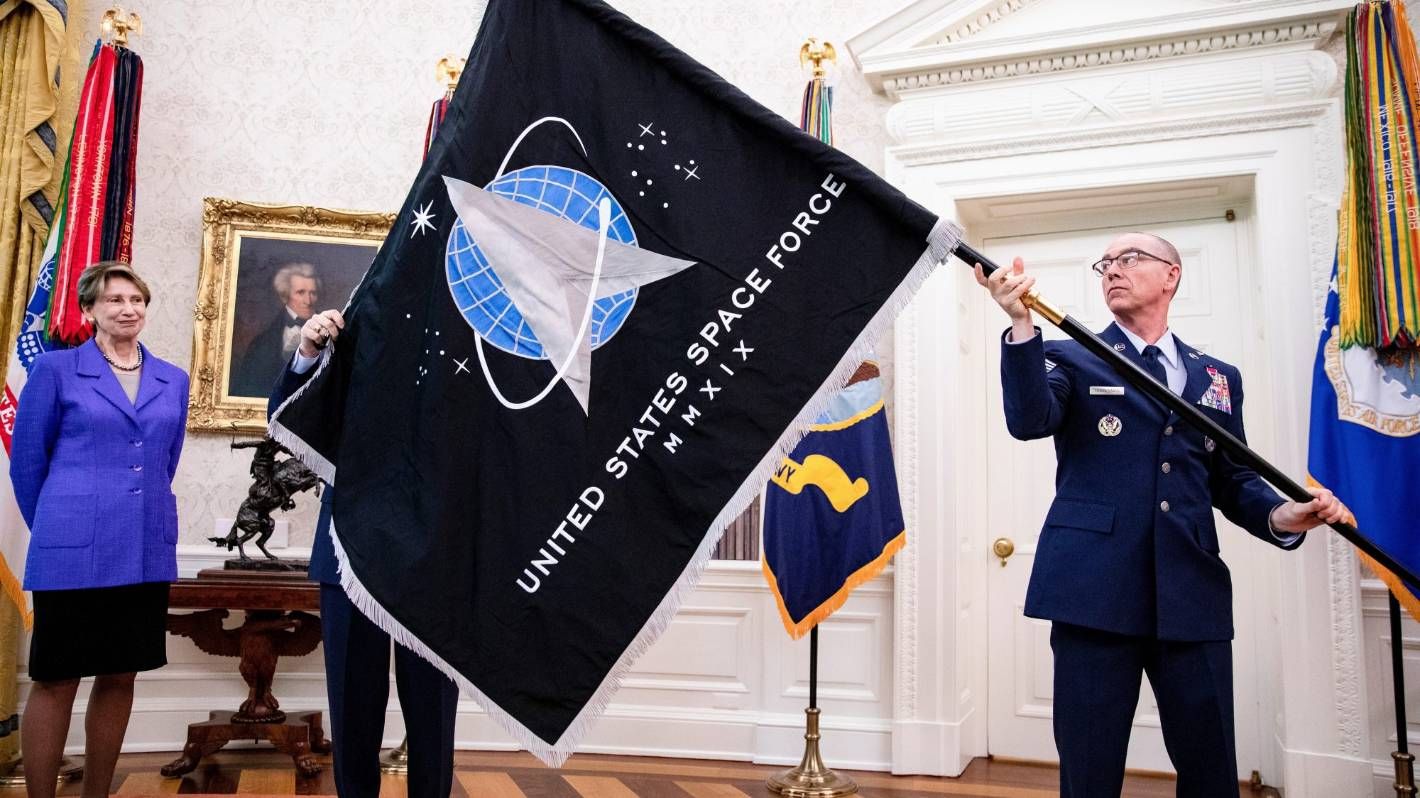
 President Trump has a penchant for grandiose promises that go unfulfilled. So when he announced a



 The CIA in conjunction with Stanford University operated a program known as STARGATE to investigate
 Sample page from CIA 1988 notes remote viewing the Galactic Federation’s Earth Headquarters
 the highest levels of governments with the intentions of intelligence gathering. When it comes to technology, special abilities or solutions to the world’s problems, it’s not the technology, the ability of people or those solutions that will change the world, it’s the consciousness behind these things. What do we use our new discoveries for? What’s our intention? Do we use them to advance the human experience and for the good of all people, or something else? This is why solutions that do pop up in various fields, like clean energy technology for example, are never implemented.









 American aerospace startup Aevum has rolled out Ravn X, an unmanned aircraft designed to deliver